
By Parveen Dahiya | May 14, 2026
The Price Tag Trap of Fast Food
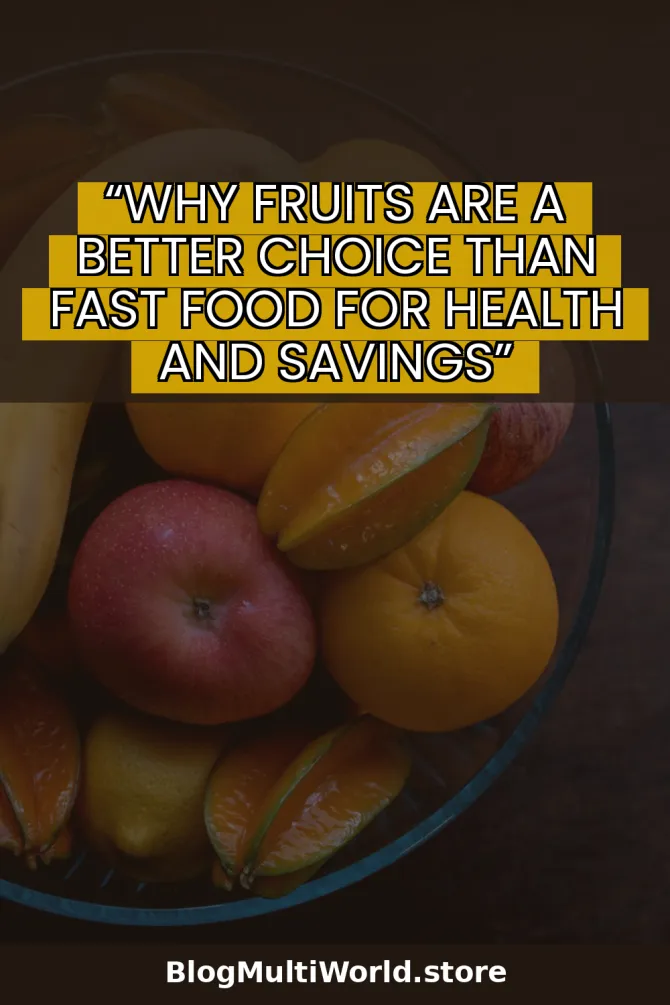
Fast food is a scam designed to drain your wallet and your energy. It's a bold claim, but look at the numbers. Last week, I was sitting in my home office in Panipat, working on a client's e-commerce site. I was hungry, lazy, and decided to open a food delivery app. A single burger meal with fries and a drink came out to nearly 550 rupees after taxes and delivery fees. That's insane. For that same amount, I could have bought three kilograms of apples, a dozen bananas, and still had change left for a kilo of oranges at the local market.
People think eating healthy is expensive because they look at organic specialty stores. Honestly, it's not that deep. If you go to the local vendor and use UPI to pay, you're getting nature's best fuel for a fraction of the cost of a greasy bag of salt and trans fats. I've noticed that when I spend money on fruits, the investment lasts several days. A burger lasts fifteen minutes and leaves me wanting to take a nap instead of finishing my CSS media queries. It's about ROI—return on investment—not just for your bank account, but for your body's performance.
Energy Crashes and Metabolic Latency
When you eat a fast-food meal, you're basically hitting your system with a massive DDoS attack of sodium and sugar. Your blood sugar spikes, your insulin goes into overdrive, and then you hit the wall. I've spent enough nights coding until 3 AM to know that a heavy meal is the fastest way to kill productivity. I remember one specific night I was trying to optimize a database for a Hostinger India project. I ate a large pizza and within thirty minutes, my brain felt like it was running on a 2G connection. I couldn't focus on the logic, and I ended up making three typos that broke the production environment.
Fruits work differently. They've got fiber, which acts like a built-in rate limiter for sugar absorption. You get a steady stream of glucose to your brain. It keeps you sharp. No jitters, no sudden drop in energy, and no need for a fourth cup of coffee. I actually wrote a piece on How Slow Eating Changed My Digestion and Energy Levels because it's all connected. If you give your body the right input, the output is much more stable. Think of fruit as a well-optimized script and fast food as a bloated legacy codebase that's barely holding together.
The Hidden Costs of Convenience
Convenience is the most expensive product you'll ever buy. Fast food companies spend billions on marketing to make you think you don't have time to peel an orange or wash a bunch of grapes. That's a lie. It takes me less time to grab a banana from the bowl on my desk than it does to wait for a delivery rider to find my house. We're paying for the packaging, the marketing, and the delivery infrastructure, not the nutrition.
There's also the long-term financial drain. If you eat junk three times a week, you're looking at a massive bill at the end of the year. Not just the food bill, but the medical bills. I've seen friends in the developer community struggle with acidity, weight gain, and sluggishness before they even hit thirty. Switching to fruit isn't just about saving 200 rupees today. It's about avoiding a 200,000 rupee hospital bill ten years from now. I've found that Practical Ways to Improve your Physical Health always start with these small, daily choices that seem insignificant at first.
Recommended Reading
Why Your Brain Prefers Natural Sugars
Your brain runs on glucose, but it doesn't need a gallon of corn syrup to function. The fructose in fruit comes packed with antioxidants and vitamins that actually help with cognitive function. When I'm deep in a complex PHP project, I need my brain to be firing on all cylinders. Fruits like blueberries or even simple Indian amla (gooseberry) provide a mental clarity that a soda never will.
I checked my energy logs last night and the days I ate fruit for breakfast were my highest output days. It's not a coincidence. When you eliminate the inflammation caused by processed oils and preservatives, your nervous system just works better. You'll find that your mood is more stable too. Fast food makes me irritable and bloated. A bowl of papaya makes me feel light and ready to tackle the next bug in my code. It's a simple swap, but the results are tangible. You don't need a fancy nutritionist to tell you that an apple is better for your focus than a bag of chips. You can feel the difference in your own skin.
Breaking the Junk Food Loop
If you're used to the high-salt, high-sugar hit of fast food, fruit might taste boring at first. That's because your taste buds are fried. They've been overstimulated by artificial flavors for years. Give it two weeks. Stop the burger runs and start keeping a bowl of seasonal fruit on your desk. Eventually, you'll find that a fresh mango or a crisp pear is far more satisfying than anything coming out of a deep fryer.
I started this transition back in 2024 when I realized I was spending too much on Zomato. I decided to use that money to buy higher-quality local produce. Not only did I save money, but I also felt a sense of control over my life again. In Panipat, we're lucky to have access to fresh markets where you can talk to the farmers directly. There's a real connection there that you lose when you're just clicking buttons on an app. It's better for the local economy, better for your wallet, and infinitely better for your health. Stop looking for a complex solution to your fatigue. The answer is usually sitting in a basket on your kitchen counter.
Leave a Reply