
By Parveen Dahiya | May 14, 2026
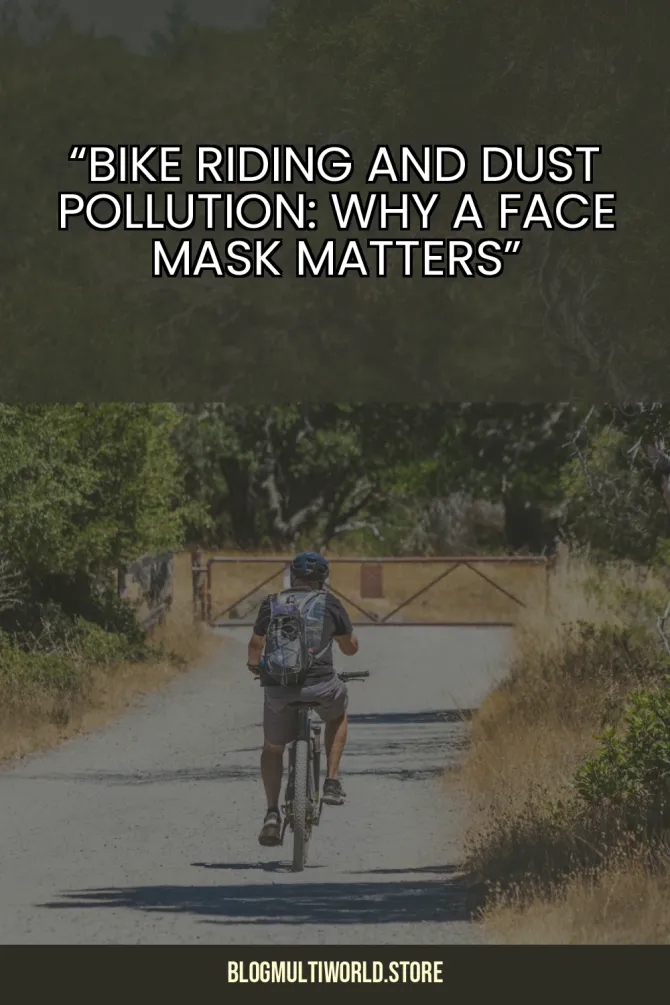
The air on NH-44 doesn't care about your lungs. If you've ever ridden a bike from Panipat towards Delhi during the morning rush, you know exactly what I'm talking about. It's not just air you're breathing. It's a thick, grey soup of diesel exhaust, pulverized concrete, and rubber particles from thousands of tires. Your throat starts feeling like you've swallowed a handful of dry sand before you even hit the Murthal toll plaza. Most people think a simple handkerchief wrapped around the face is enough, but they're wrong. It's like trying to stop a flood with a chain-link fence.
I've been riding for years. It's my primary way to clear my head after a long day of building web apps. But lately, the dust has become a monster. Last Tuesday, I was riding back from a client meeting near the Kundli industrial area. I wasn't wearing my N95 mask because I'd forgotten it on my desk. By the time I reached home, I had a splitting headache and a cough that wouldn't quit. My skin felt oily and gritty. That's when I realized that as a developer, I spend so much time worrying about practical ways to improve your physical health through ergonomics and blue light filters, yet I was ignoring the literal poison I was inhaling every day on the road.
The Invisible Enemy: PM 2.5 and Your Bloodstream
Dust isn't just the brown stuff you see on your bike's fuel tank. The real danger is the stuff you can't see. We're talking about Particulate Matter 2.5. These particles are less than 2.5 micrometers in diameter. To give you some perspective, a single human hair is about 30 times larger than that. Because these particles are so tiny, they don't just stay in your lungs. They're small enough to pass through the lung tissue and enter your bloodstream directly. This isn't some theoretical science experiment; it's happening every time you're stuck behind a Haryana Roadways bus blowing black smoke in your face.
When these particles hit your system, your body goes into defense mode. Inflammation kicks in. Your heart has to work harder. For us bikers, this shows up as immediate fatigue. You reach your destination feeling drained, not because of the ride itself, but because your body is fighting off a chemical invasion. I've noticed that on days I wear a proper filtered mask, my energy levels stay stable. When I skip it, I feel like I've pulled an all-nighter debugging a broken PHP PDO connection. It's a night and day difference in how my brain functions once I sit down to code.
Why Your Handkerchief Is Failing You
In Panipat, you see it everywhere. Every second biker has a colorful 'rumal' tied around their face. It looks cool, sure. It keeps the big bugs out of your mouth. But for dust pollution? It's useless. Cotton fabric has huge gaps when viewed under a microscope. PM 2.5 particles fly through those gaps like a bike through an empty street. A handkerchief might stop the smell of a garbage fire for a second, but it won't stop the microscopic toxins.
You need something with a melt-blown filter layer. That's the magic stuff in N95 or N99 masks. It uses static electricity to trap those tiny particles. I remember reading a thread on a local developer forum about how many of us are dealing with chronic sinus issues. Most of it comes down to the commute. If you aren't using a mask with a proper seal, you're just filtering the large sand grains and letting the deadly chemicals through. It's a false sense of security that actually hurts you because you think you're protected when you're not.
The Panipat Traffic Factor
Let's talk about the local context. Our roads are a unique mess. Between the construction of new flyovers and the constant movement of heavy trucks, the dust loading is insane. I've seen my Jio signal drop to one bar in some of these dust clouds—not because of the network, but because the air is literally thick with physical interference. Okay, maybe that's an exaggeration, but the density of the pollution is no joke. When you're idling at a red light in 40-degree heat, you're sitting in a pocket of concentrated carbon monoxide and road dust. A mask acts as a buffer. It keeps the humidity of your breath inside, which actually helps keep your nasal passages from drying out and cracking in the heat.
Recommended Reading
I started looking into how simple breathing and walking habits improved my routine a few months ago. Part of that was learning that mouth-breathing while riding is a disaster. When you ride fast, the air pressure forces air into your mouth. If you don't have a mask, your throat becomes the primary filter. That leads to that 'smoker’s cough' even if you've never touched a cigarette in your life. A mask forces you to breathe more through your nose, which is your body's natural (but currently overwhelmed) filtration system.
The Real Cost of a Good Mask
A decent N95 mask with a breathing valve costs maybe 150 to 300 Rupees. A high-end reusable one might go for 1,000. Compare that to the cost of a single visit to a pulmonologist or the price of antibiotics for a chest infection. It's a no-brainer. I keep three masks in my bike's storage box. One is always clean and ready. I've made it as much of a habit as putting on my helmet. If the helmet protects my skull, the mask protects my internal organs. Both are non-negotiable.
Honestly, it's not that deep. You don't need a PhD to see the black soot on your face when you wipe it with a wet towel after a ride. That soot is what's going into your lungs. People might look at you weirdly if you wear a bulky mask, but who cares? I'd rather look like a sub-zero character from Mortal Kombat than spend my weekend nebulizing because I can't catch my breath. It's about being smart with your health so you can keep doing what you love, whether that's riding long distances or building the next big thing on the web.
Maintaining Your Mask for Maximum Protection
Don't be that guy who wears the same disposable mask for three months. Once the filter is clogged, the breathability drops. You'll start struggling for air, and you'll end up pulling the mask down to your chin, which defeats the whole purpose. If you're using the disposable N95 types, toss them after 40 hours of use. If it's a reusable one with replaceable filters, change them every two weeks if you're a daily commuter. In a place as dusty as Haryana, filters die fast. I check mine every Sunday evening while I'm doing my weekly backup of my local databases. It’s a ritual now.
Also, fitment is everything. If air is leaking from the sides of your nose, the mask is just a chin strap. Pinch the metal clip. Make it tight. It might leave a small mark on your nose for a few minutes, but it's worth it. A tight seal ensures that 100% of the air you breathe is actually passing through the filter media. That's the only way to stay safe when you're stuck in a traffic jam behind a tractor-trailer kicking up a storm of dirt.
The Bottom Line
Riding is freedom. I love the wind in my face, but I hate the dust in my lungs. We live in a world where the air quality index is often in the 'severe' category. We can't wait for the government to fix the air overnight. We have to take individual responsibility. Get a mask. Wear it every time you twist the throttle. Your future self will thank you for the clean lungs and the extra years of riding. It’s the simplest upgrade you can give your bike kit, and it’s arguably the most important one for your long-term survival in the urban jungle.
Leave a Reply